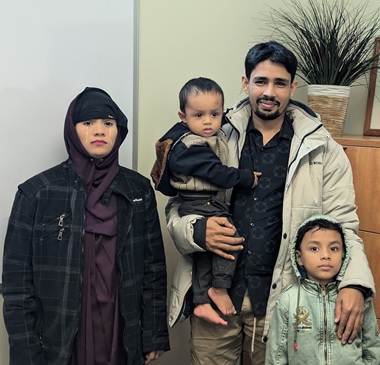
Mohammed Kasem, Hoor Jannat and their children visiting MCC a few days after arriving in Canada in October 2024, to receive essential supplies and support as they began settling into their new home. MCC Photo / Jennifer Mpungu
“This is freedom. We have everything a human being needs to be alive. Education, work, food, health care.”
– Mohammed Kasem, a refugee welcomed by his sponsorship group with support from MCC BC
The Rohingya are one of Myanmar’s ethnic minorities. UN Secretary-General Antonio Guterres has called them “one of, if not the, most discriminated people in the world.” They have faced decades of violence, restricted rights and forced displacement.
Like many Rohingya families, the Kasem family was forced to flee Myanmar and seek refuge in neighbouring Bangladesh. Even there, safety remained uncertain.
As Mohammed recalls, “Our life was quite challenging and horrible because we are the people who faced genocide in Myanmar and also more hardship in the refugee camp, especially for my family. Some of the groups attacked me and my family twice.”
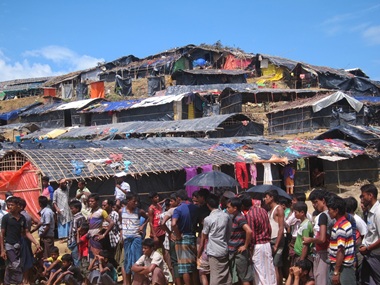
After fleeing Myanmar, the Kasem family spent years in Kutupalong refugee camp in Bangladesh. Photo: World Renew
The family spent years living in Kutupalong, the world’s largest refugee camp.
Residents could not leave freely, as movement outside the camp was strictly controlled and enforced. Life was shaped by overcrowding and difficult seasonal conditions. Winter was cold and summer was extremely hot. Access to food, health care and education was limited.
As Mohammed recalls: “School is the basic grade one to four. It’s not the official curriculum. Healthcare is basic. There is spreading of hepatitis . . . We had nothing to do.”
Despite these conditions, the Kasem family found ways to contribute in the camp. Mohammed worked with a nonprofit organization supporting the Rohingya Film Project, training youth in videography, storytelling and autobiography. Through this work, they documented the stories of genocide survivors and shared them more widely.
The Kasem family learned about MCC through Mohammed’s uncle, who connected with MCC after hearing about their situation in the camp.
In October 2024, the Kasem family came to Canada through MCC British Columbia’s sponsorship program and settled in Surrey. MCC BC supported them through the sponsorship process, working with the sponsors to ensure the family had access to health care, schooling for the children, language training and basic life skills.
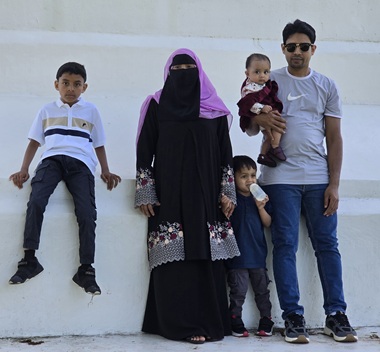
Mohammed Kasem, Hoor Jannat and their children on an outing to White Rock.
“Finally now here, we are enjoying a better life. Access to health and education – everything we have. It’s lucky for us to have a new life in Canada through MCC and through this program. I would like to express my deepest gratitude to MCC and the people who supported this program.”
Since arriving in Canada, Mohammed has begun working at a local recycling company, where he has progressed from cleaner to quality controller to surveyor operator.
Hoor is learning English, and their children are attending school and beginning to explore new opportunities. In October 2025, the family welcomed their newest family member, a daughter.
“This is freedom. We have everything a human being needs to be alive. Education, work, food, health care. We never enjoyed this in Bangladesh or Myanmar,” Mohammed says.
The Kasem family’s experience reflects what MCC’s sponsorship program makes possible: not only safety, but the opportunity to rebuild life with support from a community. It is a story of a family moving from survival toward stability and belonging.
“I would like to encourage [MCC supporters] to continue their wonderful and generous work to support the families across the world,” Mohammed says.
The Kasem family shows what’s possible when those fleeing violence are welcomed, supported and given a chance to thrive.
Monet Lamphere-Ma is Communications Lead for MCC British Columbia. This article is re-posted by permission from the Mennonite Central Committee (MCC) site.