

“Oh, morning at the brown brink eastward, springs . . .” Photo by Sarah Tweedale.
Richard Austin will perform the poetry of Gerard Manley Hopkins at Regent College on Epiphany (January 6, 7 pm).
And for all this, nature is never spent;
There lives the dearest freshness deep down things;
And though the last lights off the black West went
Oh, morning at the brown brink eastward, springs –
Because the Holy Ghost over the bent
World broods with warm breast and with ah! Bright wings.
Those words from Gerard Manley Hopkins conclude a poem which begins with the well-known lines: “The world is charged with the grandeur of God.”
But the middle of the poem describes vividly a world in which God is forgotten, and seems to be absent: a world which is “. . . seared with trade; bleared, smeared with toil / and wears man’s smudge and shares man’s smell . . . “
So after the “Twelve Days of Christmas,” which celebrate the Incarnation in the birth of Jesus (“God’s infinity dwindled to infancy” as Hopkins wrote in another poem), Epiphany is an appropriate season in which to hear his work. The word epiphany means “showing forth” or “manifestation.”
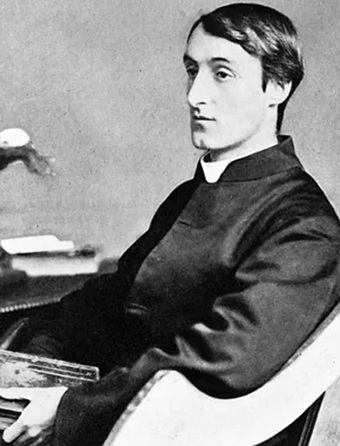
The beauty of Gerard Manley Hopkins’ language reflects the beauty of God’s creation.
And no poet has written so powerfully about the manifestation of God in this “bent world” as Hopkins.
Hopkins grew up in Victorian England, and while a student at Oxford made the difficult choice to become a Catholic, and then a Jesuit. His vocation as a Jesuit left him little time for poetry, and most of those few who read it found it difficult or incomprehensible.
He died in 1889, and his slim body of work was not published till 30 years later, in 1919. But his distinctive style quickly became an important influence on 20th century poetry, and he is now acknowledged to be among the greatest of English poets.
Many Christians today are finding his recovery of the place of Christ in Creation to be a rich resource in our troubled times.
Richard Austin, a British actor who now lives on the Sunshine Coast, has spent much of his professional life presenting Hopkins work. Hopkins knew that his poetry needed to be heard to be fully understood, and Austin has let those poems be clearly heard by thousands.
So he gives his audience back the beauty of Hopkins’s language, as Hopkins’s poetry itself gives back to God the beauty of the world.
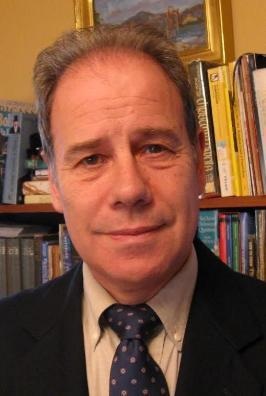
Richard Austin will perform a selection of Hopkins’ poems at Regent College.
As Hopkins wrote in his spiritual journal:
God’s utterance of himself in himself is God the Word, outside himself is this world. This world then is word, expression, news of God.
Therefore its end, its purpose, its purport, its meaning, is God and its life or work to name and praise him. . . . the world, man, should after its own manner give God being in return for the being he has given it or should give him back that being he has given.
The Epiphany date of this presentation at Regent is a fortunate coincidence. Austin will be a guest on that day in a one-week course on the poetry and thought of Gerard Manley Hopkins, taught by Regent emeritus professor Loren Wilkinson, who will offer comments during the evening.
Wilkinson joined Regent’s faculty in 1981 and was appointed Professor Emeritus in 2016. His interests include Christianity and the arts, philosophy and earthkeeping. His writing develops a Christian environmental ethic and explores the human relationship to the natural world in its environmental, aesthetic, scientific and religious dimensions.
‘Back to Beauty’s Giver,’ the evening performance of the poems, is a gift to the community from that class. There will be no admission charge. Go here for more information.
My perfect Epiphany evening date with God! See everyone there. (Regent may need a bigger room than Rm 100 . . .)