

MP for Cloverdale-Langley City Tamara Jansen, sponsor of private members bill C-218, with supporter and fellow Conservative MP Andrew Lawton.
British Columbia advocates are leading the charge on either side of the MAiD (Medical Assistance in Dying) debate as it continues to receive attention well beyond the borders of Canada.
The most notable recent example of that attention was pointed out by CBC News September 16:
In an interview with the New York Times, [prolific and iconic children’s author Robert] Munsch says he has decided on a medically assisted death, also known as MAID, after previously being diagnosed with dementia and Parkinson’s disease.
He applied and was approved shortly after his diagnosis, he told the publication.
Munsch is Canadian. His daughter pointed out that her father is not actually dying, but wanted to make sure he was provided for while he retained his decision-making capacity, which is still required under Canadian law.
UN committee concerned
A report by the United Nations Committee on the Rights of Persons with Disabilities this spring asked Ottawa to repeal MAiD for anyone without a terminal illness (‘Track 2’) in Canada’s MAID program.
A CTV News report stated:
[T]he report recommends Canada create a federal MAiD watchdog to look into complaints and investigate the causes that lead to people with disabilities applying for assisted death in the first place.
MAiD is offered as a state-sanctioned relief for people who were failed by the government due to improper access to health care or housing, the report says. Poverty, lack of access to employment and services for people with disabilities, and the lack of a support system were also cited as factors.
The UN committee wrote it is “extremely concerned” by Ottawa’s broadening of Canada’s MAiD laws in 2021 to offer medically assisted death to people who have permanent, but non-terminal physical illnesses.
Go here for the March 11 write-up on the UN site.

Accessible Canada marks March 14 as the anniversary of Canada’s ratification of the United Nations Convention on the Rights of Persons with Disabilities.
Closer to home, Alexander Raikin has written an extensive report released on the Cardus site September 16: ‘Contrary to Carter: Assisted Dying’s Impact on Canadians with Disabilities.’ One key finding:
This report concludes that Canada’s legalization of assisted suicide has led to an intensified risk of premature death for vulnerable groups, and that the expected safeguards have failed to materialize.
See below for all the key findings from the report.
Local advocates
Several Metro Vancouver advocates are playing a key role in this debate about euthanasia.
- Isabel Grant
The CTV News report quoted a local academic at some length, beginning with this:
Isabel Grant, a criminal law professor at the University of British Columbia, says Track 2 is premised on the idea that death is preferable for people with disabilities.
On behalf of the Feminist Alliance on International Action, Grant co-authored a submission to the Geneva hearings about repealing MAID Track 2, published on March 27.
“Somebody else who wants to die, we offer them suicide prevention, we offer them supports,” Grant told CTVNews.ca on Friday. “We don’t offer them death.”
- Dr. Ellen Wiebe

Dr. Ellen Wiebe
An August 27 article in the UK’s Daily Mail featured an interview with Dr. Ellen Wiebe a strong proponent of MAiD.
Despite the typically provocative header – Canada’s ‘high priestess’ of euthanasia makes explosive admission about what poor clients reveal to her . . . as she call for major rollout to ‘sick minors’ – the publication gave quite Wiebe quite a bit of space.
Here is a portion:
She has been called ‘Dr Death,’ the ‘High Priestess of euthanasia,’ and dragged through courts for greenlighting controversial assisted suicides.
But Dr Ellen Wiebe – one of Canada‘s most prolific providers of state-sanctioned euthanasia – insists she is not evil.
Speaking exclusively to the Daily Mail from her Vancouver home, the 73-year-old revealed she has overseen more than 400 lethal injections since Canada legalized Medical Assistance in Dying (MAiD) in 2016 – and still defends expanding access to children and even the poor.
‘It’s not easy to be depicted as evil, but I’m used to that,’ said Wiebe, who also runs an abortion clinic she founded nearly three decades ago.
‘I’ve been an abortion provider for 50 years. Helping my patients access their rights and giving them good medical care is not evil.’
Canada has the fastest-expanding assisted suicide regime in the world.
More than 15,000 people ended their lives under MAiD in 2023 alone – about one in 20 deaths nationwide.
That figure represents a 16 percent jump from 2022, pushing Canada ahead of countries such as the Netherlands, which pioneered euthanasia decades earlier. . . .
The Guardian (also based in the UK) wrote about Wiebe last fall, noting, “Court order blocks Vancouver physician Ellen Wiebe from euthanizing Alberta resident due to lack of physical ailment.”
- Mike Schouten / ARPA Canada

ARPA Canada’s Mike Schouten (left) and Levi Minderhoud in front of the BC Legislature. (image from ARPA Canada video)
At the end of the Daily Mail article is a video featuring an anti-MAiD campaigner. Mike Schouten, who lives in the Fraser Valley, is Executive Director of ARPA Canada.
He said, in part:
People are requesting Medical Assistance in Dying because they can’t afford rent, or they can’t afford basic medications for things like knee pain or joint pain, things like that.
Instead, they’re like, it’s easier just to die than to get proper medication or help that I want, so I’m going to request MAiD. And those requests are being granted.
And that’s the part that is really causing a lot of alarm. We are living in a time where, while we have made all these strides, we’re going to make it easier and easier and easier for people who have suicidality and those expressions towards ending their life – we’re simply affirming that, saying, “You’re right, your life isn’t worth living.” . . .
ARPA Canada, “a grassroots Christian political advocacy organization,” has been consistently critical of MAiD / euthanasia legislation, but has also taken a more positive approach through its Care Not Kill site.
- Tamara Jansen
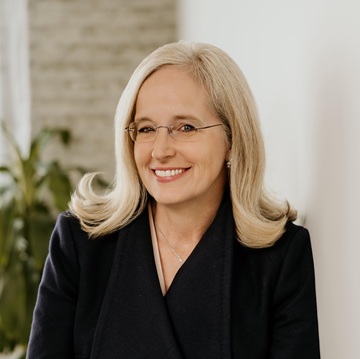
Tamara Jansen says, “Canadians are watching. They need us to stand up for life, dignity and hope.”
Tamara Jansen, MP for Cloverdale-Langley City, introduced a private members (Bill C-218) in order to amend the Criminal Code.
The Evangelical Fellowship of Canada describes the bill in this way:
A law allowing euthanasia for mental illness alone has already passed and will take effect in March 2027 unless a bill is passed to stop it.
MP Tamara Jansen introduced Bill C-218 in the House of Commons on June 20, 2025. This bill would remove the provisions that will allow MAiD for mental illness alone in 2027.
Bill C-218 would exclude a mental disorder from being considered a “grievous and irremediable medical condition” for the purposes of Medical Assistance in Dying. This would mean that no one would be eligible for MAiD on the basis of mental illness alone.
While introducing Bill C-218, Jansen said:
Mr. Speaker, imagine that someone’s son or daughter has been battling depression for some time after losing their job or maybe due to a broken relationship. Imagine they feel a loss so deep that they are convinced the world would be better off without them.
Now imagine this. Starting in March 2027, under Canadian law, they could walk into a doctor’s office and ask them to end their life. Under our law, the system could legally do just that. Our society could end a person’s life for solely a mental health challenge.
That is not a future scenario; it is the law right now waiting to take effect. The Liberal government has already had to delay this law twice.
Why? It is because medical experts and legal scholars have raised the alarm again and again, saying that it is impossible to implement safely. Clinical experts have warned that there is no evidence-based way to determine if someone with a mental illness would get better. Most do. Still, the government is moving forward.
The message it is sending is that struggling Canadians, trauma survivors and those battling depression, schizophrenia or PTSD are being told that death is a solution we are now willing to offer in response to a life of suffering, often compounded by harm this very society has caused them.
That is not health care. That is not compassion. It is abandonment. Mental illness is treatable, and recovery is possible, but only if we show up and help.
Canadians are watching. They need us to stand up for life, dignity and hope.
It is my honour and privilege to rise today and introduce an act to amend the Criminal Code on medical assistance in dying.
Ontario MP Andrew Lawton is supporting Bill C-218 alongside Jansen. Earlier this year he shared “a deeply personal” I Got Better video message about which he said:
I almost died by suicide 15 years ago.
If MAID had been available when I was going through my battle with depression, I would have sought it. If the laws coming into force in 2027 were in place then, I would likely would be dead right now.
I thought life was hopeless, but I got better.
The EFC has been active in opposing state-backed euthanasia and is supporting Bill C-218; go here for suggestions on how to contact your MP, sample emails, etc.
****************************************
These are the key points of Andrew Raikin’s Cardus report (‘Contrary to Carter: Assisted Dying’s Impact on Canadians with Disabilities’), released September 16:
- When assisted suicide (MAiD) was legalized in Canada, courts and legislators expected that safeguards could be put in place to protect vulnerable groups, such as persons with physical or mental disabilities, from heightened risk or inordinate impact.
- This report examines whether these expectations have been borne out in reality, using the available national and provincial data and peer-reviewed medical studies.
- This report concludes that Canada’s legalization of assisted suicide has led to an intensified risk of premature death for vulnerable groups, and that the expected safeguards have failed to materialize.
- From 2019 to 2023, at least 42 percent of all MAiD deaths were of persons who required disability services, including over 1,017 persons who required but did not receive these services. MAiD providers in Canada have euthanized disabled persons who needed disability supports and were unable to access them.
- A study of MAiD deaths between 2016 and 2019 at a tertiary care centre in Toronto found high rates of psychiatric comorbidity among patients requesting MAiD; most of these requests were granted. Of 155 patients requesting, sixty (39 percent) had a documented psychiatric comorbidity, most commonly depression.
- According to MAiD providers in 2023, the suffering of almost half of patients to whom they provided an assisted suicide included the perception of being a burden to others, 10 percent more than in the previous year.
- In 2023, isolation and loneliness were reported as a source of suffering by 22 percent of MAiD recipients, up 5 percent from the previous year.
- Degenerative neurological illnesses pose significant risks for patient coercion toward MAiD. In 2023, almost 15 percent of persons who died by MAiD had a neurological condition as a qualifying illness.
- In 2023, 241 persons with dementia received a MAiD death; in 106 of these cases, dementia was the sole underlying condition.
Go here for the full report.