

As I have pointed out earlier in this series, missions and missionaries have not, in recent years, received the amount of attention they warrant.
The good news, though, is that many new books are considering the missionary enterprise.
Some authors are still writing missionary biographies (thank you!), but many of the new books are by missiologists and academics who provide valuable insights into our missionary history and its overlap with colonial enterprises and world Christianity.
- Las G. Newman: To Die in Africa’s Dust: West Indian Missionaries in Western Africa in the 19th Century (Langham Academic, 2024)
When we think of missionaries to Africa we inevitably think of David Livingstone, and possibly of groups such as Africa Inland Mission.
Las Newman wants to open our eyes, and introduce us to some of the intrepid West Indian missionaries who also went to Africa.
None of the names (sadly) were familiar to me – which is why To Die in Africa’s Dust is such a valuable book. Newman points out that:
Between 1841 and 1897, five expeditions bearing over 100 West Indians of African descent went to Western Africa to participate in the enterprise to plant Christianity in the soil of sub-Saharan Africa.
He discusses five expeditions, though focusing particularly on three of them:
- The Basel Mission (with Moravians) from Jamaica to the Gold Coast in 1843, led by Andreas Riis;
- The Baptist Mission from Jamaica to the Cameroon in 1844, led by John Clarke;
- The Anglican Mission from Barbados to the Rio Pongas in 1855, led by Hamble James Leacock.
The publisher’s description of the book:
“Christian mission in the modern era has generally been conceptualized as a Western endeavour: ‘from the West to the rest.’ The rise and explosive growth of world Christianity has challenged this narrative, emphasizing Christian mission as ‘from everywhere to everywhere.’
“Dr. Las Newman contributes to this revitalized perspective, interrogating our understanding of modern missions history by drawing attention to the role of African West Indians in the spread of Christianity in sub-Saharan Africa.
“This comparative study of three 19th century missionary expeditions critiques common narratives around West Indian involvement in the missionary enterprise. Newman proposes that far from being misguided adventurers or nostalgic exiles, African West Indians were fueled by a quest for emancipation that was birthed in the crucible of Caribbean slave society.
“Acting as agents of the Western missionary enterprise, they nevertheless shaped an understanding of Christian mission as a force for justice and freedom that carried with it personal, religious and socio-political implications.
“Newman argues that it was this conception, embraced and championed by African West Indians, that enabled the missionary project in Western Africa to survive, flourish and ultimately take firm root in African soil.
“This study questions historical interpretations of the Western missionary endeavour, exploring the pivotal role of native agents in cross-cultural Christian mission and allowing readers to hear from marginalized voices as they tell their own stories of engagement, struggle, and liberation.”
Brian Stanley, Professor Emeritus of World Christianity at the University of Edinburgh, wrote of the book:
Las Newman has given us a welcome reminder that the planting of Christianity in 19th century West Africa was as much a black as a white mission enterprise. His book also highlights the fact that West Indian black missionaries, no less than their white counterparts, had to grapple with the difficult issues of how to make an informed Christian response to the indigenous religions and cultures of Africa.
Bernhardt Y Quarshie, Akrofi-Christaller Institute of Theology, Mission and Culture in Ghana, added:
Newman’s extensive use of archival sources enlivens his accounts and lends solidity to his work. The reader is left with a better appreciation of the holistic nature of the missio Dei and what can be learnt from the experiences of these West Indian missionaries for the pursuit of mission in our time and beyond.
Las Newman has been very active in the modern missionary movement himself. After gaining a PhD in Christian Mission from the Oxford Centre for World Mission, UK, he was President of the Graduate School of Theology in Kingston, Jamaica.
He retired last year as Global Associate Director for Regions for the Lausanne Movement, which equips leaders to fulfil the Great Commission. He is a member of the International Fellowship for Mission as Transformation. (Go here for a conversation about “Why ‘Transformation’? Changing our Mission Paradigm,” on the INFEMIT site.)

Joseph Jackson Fuller was a Baptist missionary to the Cameroon.
The following comment from To Die in Africa’s Dust offers a valuable insight into both the larger missionary movement of the past couple of centuries and the significance of the West Indian initiatives.
As a consequence of Christian missionary expansion in the Age of Empire and amid anti-imperial revolutions, it was inevitable that questions arose about the relationship between colonial empires and Christian mission, and the nature of Christian missionary engagement under conditions of colonialism and empire-building.
Even as David Livingstone was highlighting and championing the missionary task in Africa in the mid-19th century, as bearers of ‘Christianity, Commerce and Civilization,’ mission theorists such as Henry Venn (1841 – 1873) of the Church Missionary Society and Rufus Anderson (1832 – 1880) of the American Board of Foreign Missions were proposing the concept of the ‘euthanasia of mission.’
Their theoretical construct of the ‘three-self’ model of missions – that is, that a church, once planted, should grow towards becoming self-governing, self-supporting and self-propagating – focused less on the long-term agency of the missionary and more on the development of an indigenous native church.
Throughout this [book], it was evident that the West Indian agents in Africa understood and accepted the Venn-Anderson conception of the enterprise. Nevertheless, in their field encounters in Africa, they demonstrated their own unique conception of the enterprise in terms of mission as an agency of justice and freedom in which the goal of building a native church was an integral part of their strategy. That strategy involved the employment of every facet of the missionary apparatus.
Contributions from the margins should not, therefore be treated as insignificant for they may offer insights not only into the complexities of cross-cultural and transnational transmission of Christianity but also into the nature and translatability of the Christian message itself.
- Noel Leo Erskine: Black Missionary in an Age of Enslavement: The Life and Times of George Liele (Rowman & Littlefield, 2024)
 Black Missionary in an Age of Enslavement is a good book to read alongside To Die in Africa’s Dust.
While the latter tells the story of West Indian missionaries to Africa, the former describes the life of an African slave raised in the United States who became a missionary in the Caribbean – and in turn influenced later black missionaries to Africa.
“Black Missionary in an Age of Enslavement looks at Christianity and mission through the life and times of the enslaved American Baptist George Liele (1750 – 1825).
“The book highlights his travels as an itinerant preacher in South Carolina, Georgia, Jamaica (and through his protégé there, David George), Nova Scotia, Sierra Leone and, toward the end of his life, England.
“Liele knew what it meant to be both slave and free. In Jamaica, as in Savannah, he was imprisoned for his faith and saw the survival of the church as pivotal.
“Liele was a man of firsts: the first African American ordained to the Christian ministry (May 20, 1775), and the first missionary to take the Christian gospel outside the United States.
“It was Liele, more than any other missionary, who initiated the practice of offering education to native people both enslaved and free. With the hymnal in one hand and the Bible in the other, Liele taught the enslaved and free that they were destined for liberation.”
In a very positive article on Liele, Boston University’s History of Missiology notes: “[B]y the time William Carey – often mistakenly perceived to be the first Baptist missionary – sailed for India in 1793, Liele had worked as a missionary for a decade.”
- Vance Christie: David Livingstone: Missionary, Explorer, Abolitionist (Christian Focus, 2023)
- Vance Christie: David Livingstone: Africa’s Greatest Explorer (Christian Focus, 2024)
 David Livingstone has been the subject of numerous books – and now Vance Christie has added two more, a massive and extensively documented (767-page) biography and a much shorter one for a younger audience.
“An unpretentious Scottish missionary doctor, explorer and abolitionist, he opened the door for Christianity in southern Africa. Vance Christie’s biography is the most comprehensive and accurate account ever written about Livingstone.
“During his lifetime he was a hero in Britain and beyond, and gained a degree of respect, trust, appreciation and even affection with many African people.
“He was a man who overcame many deprivations and discouragements, and displayed the utmost measure of courage, self–control, faith, wisdom and ingenuity. Christie takes a balanced look at Livingstone’s amazing achievements, but also at his very real flaws.”
Vance’s biography of Livingstone has been well received. For example:
By setting Livingstone in the context of his times and through exhaustive, scrupulous reliance on well–attested primary sources, Christie brings ‘the Doctor’ to life as a historical figure, but also as a worthy example for our times as well.
– Mark A. Noll (eminent historian and author of many books, including The Scandal of the Evangelical Mind and A History of Christianity in the United States and Canada)
I thank God for this fresh biography of David Livingstone, the pioneering missionary explorer of central Africa. He died in 1873 and his heart was buried in Zambia. On the centenary of his death, Zambians held commemorative events in several stadia in honour of this man. Also, the only town in Zambia that remains with a foreign name after its political independence from Great Britain is Livingstone. If you want to understand why a people who were once steeped in spiritual darkness should honour a Christian missionary in this way, read this definitive biography!
– Conrad Mbewe (Pastor, Kabwata Baptist Church, Kabwata, Zambia; Founding Chancellor, African Christian University, Lusaka, Zambia)
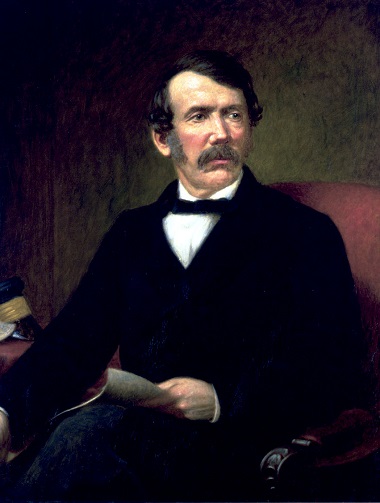
This portrait of David Livingstone by Thomas Annan is featured on the website of the Royal College of Physicians and Surgeons of Glasgow.
Reviewing the book for Themelios, Kevin Rodgers began:
David Livingstone is one of the best-known Christian missionaries, and a wide range of biographies exist on his life and ministry. The late 19th to early 20th-century works tended towards hagiography and painted Livingstone in the most positive light.
Those from the mid to late 20th century took a harsher tone, emphasizing his failures as a family man or painting him as a political agent of the British government.
What had been missing was an exhaustive, academic work that is objectively fair and sympathetic to the man himself and his cause–Christian missions. This is where Vance Christie has set the standard in his recent biography of David Livingstone.
Vance himself offered a dozen quite convincing reasons to read the book here.
One element I loved was the fact that missionaries and their work were followed and appreciated by many during the 19th century. Livingstone was influenced by earlier missionaries and was encouraged to go to the mission field himself.
Vance wrote:
From the time of his Christian conversion, Livingstone thought that ‘the salvation of men ought to be the chief desire and aim of every Christian.’ He resolved to give everything he earned, beyond the modest amount he needed to support himself, to the causes of Christian missions.
But he did not entertain the thought of becoming a missionary himself until a couple of years later, when he was 21 years old. Then, in the middle of 1834, he read an appeal that Karl Gutzlaff, an early pioneer missionary in China, had made to the churches of Britain and America to send missionaries to China.
Gutzlaff’s Journal of Three Voyages Along the Coast of China, first published in 1834, chronicled his recent missionary efforts along China’s seaboard. During those journeys he preached and distributed Christian literature to receptive audiences. His use of medicine to treat opium addiction, certain eye diseases and other ailments helped to win a hearing for his Christian message.
In his appeal, Gutzlaff reported China’s enormous population – then the largest in the world at some 400 million, with hardly any of that number being Christians – as well as the tragic scarcity of missionaries there.
The crying spiritual and social needs of China, the dearth of missionaries and Gutzlaff’s personal example as a missionary who employed medicine to further his ministry impacted Livingstone mightily, and led him to dedicate his life to similar service.
[Livingstone wrote]: In the glow of love which Christianity inspires, I soon resolved to devote my life to the alleviation of human misery. Turning this idea over in my mind, I felt that to be a pioneer of Christianity in China might lead to the material benefit of some portions of that immense empire, and therefore set myself to obtain a medical education, in order to be qualified for that enterprise.
His parents and pastor were very supportive, though of course he ended up in Africa rather than China.

Vance wrote of David Livingstone: Africa’s Greatest Explorer:
“Bearing in mind that I was writing for a younger audience, I’ve included many instances of action and adventure. . . .
“Beyond action and adventure, I’ve sought to portray numerous other significant and beneficial aspects of Livingstone’s life as well, especially those that would be worthwhile for young people to consider.
“To name but a few, those include:
- the challenging circumstances of his boyhood;
- his Christian conversion and call to be a missionary;
- God’s protection of and provisions for him through many difficult and dangerous situations;
- his chief priority throughout his career of helping bring Christianity and the Gospel of salvation to people groups which had never before heard of them;
- his determination to expose and help bring an end to the destructive slave trade throughout southern Africa;
- his resolutely enduring all variety of hardships and sacrifices in order to carry out the ministries and service he believed God would have him to undertake.”
He added in an article announcing the book, “It’s my definite desire and prayer that through the publication of David Livingstone: Africa’s Greatest Explorer, countless young people will (1) become acquainted with one of the outstanding heroes of Christ’s Church and (2) be encouraged and strengthened in their own Christian faith and service.”
- Mathilde Leduc-Grimaldi & James L. Newman, editors: Finding Dr. Livingstone: A History in Documents from the Henry Morton Stanley Archives (Ohio University Press, 2022)

“This eye-opening perspective on Stanley’s expedition reveals new details about the Victorian explorer and his African crew on the brink of the colonial Scramble for Africa.
“In 1871, Welsh American journalist Henry M. Stanley traveled to Zanzibar in search of the “missing” Scottish explorer and missionary David Livingstone. A year later, Stanley emerged to announce that he had “found” and met with Livingstone on Lake Tanganyika.
“His alleged utterance there, ‘Dr. Livingstone, I presume,’ was one of the most famous phrases of the 19th century, and Stanley’s book, How I Found Livingstone, became an international bestseller.
“In this fascinating volume Mathilde Leduc-Grimaldi and James L. Newman transcribe and annotate the entirety of Stanley’s documentation, making available for the first time in print a broader narrative of Stanley’s journey that includes never-before-seen primary source documents – worker contracts, vernacular plant names, maps, ruminations on life, lines of poetry, bills of lading – all scribbled in his field notebooks.
“Finding Dr. Livingstone is a crucial resource for those interested in exploration and colonization in the Victorian era, the scientific knowledge of the time and the peoples and conditions of Tanzania prior to its colonization by Germany.”
Near the end of Stanley’s four months travelling with Livingstone he gave the veteran missionary some advice about missions:
I would certainly have more than one or two missionaries. I would have a thousand, scattered not all over the continent – but among some great tribe, or cluster of tribes, organized systematically. . . .
Livingstone responded:
In a way, that is just my opinion, but someone must begin the work. Christ was the beginner of the Christianity that has now spread over a large part of the world – then came the 12 Apostles & then the disciples.
I feel sometimes as if I was the beginner for attacking Central Africa and that others will shortly come and after those there will come the thousand workers that you speak of. It is very dark and dreary – but the promise is “Commit thy way to the Lord, trust in Him and He shall bring it to pass.”
I may fall by the way, being unworthy to see the dawning. . . .
Loneliness is a terrible thing – especially when I think of my children. I have lost a great deal of happiness I know by these wanderings. It is as if I had been born to exile, but it is God’s doing and He will do what seemeth good in His own eyes. But when my children & home are not in my mind – I feel as though appointed to this work & no other.
I am away from the perpetual hurry of civilization – and I think I see far & clear into what is to come. And then I seem to understand why I was led away here & there and crossed and baffled, over and over, to wear out my years & strength.
Why was it but to be a witness of the full horror of the slave trade, which in the language of [Robert] Burns is sending these pitiless half-castes:
Like bloodhounds from the slip / with woe and murder o’er the land
My business is to publish what I see, to rouse up those who have the power to stop it once and for all. That is the beginning – but in the end they will also send proper teachers of the gospel, some here & some there, and what you think ought to be done will be done in the Lord’s good time.
Vance Christie expands on this picture of Livingstone with a valuable article about “Stanley’s extremely positive pen portrait of David Livingstone after the two men spent four challenging months together in inner Africa.”
He quoted Stanley, for whom a number of “factors inclined him to be reserved toward rather than receptive of a missionary doctor and his Christianity.”:
In a memorial statement that Stanley composed following Livingstone’s death, he further testified about him: “He preached no sermon by word of mouth while I was in company with him, but each day of my companionship with him witnessed a sermon acted.
The Divine instructions given of old on the Sacred Mount [in Matthew 5 – 7] were closely followed day by day, whether he rested in the jungle camp or bided in the traders’ town or savage hamlet.
Lowly of spirit, meek in speech, merciful of heart, pure in mind and peaceful in act; suspected by the Arabs to be an informer, and therefore calumniated [slandered] by his own servants, but ever forgiving; often robbed and thwarted yet bearing no ill will; cursed by the marauders yet physicking their infirmities; most despitefully used yet praying daily for all manner and condition of men!”
* Aila Tasse with Dave Coles: Cabbages in the Desert: How God Transformed a Devout Muslim & Catalyzed Disciple Making Movements among Unreached Peoples (Beyond Publishing, 2024)

“Are Disciple Making Movements really happening among unreached peoples and Muslims?
“If so, how are they happening? And what do those movements look like? You’ll find answers to these questions and many more in Cabbages in the Desert, where a devout Muslim teenager meets a kind Christian teacher.
“Radically transformed then banished from home, Aila receives a vision of unreached peoples coming to Christ. After successfully planting many churches, he hears a challenge to explore a more fruitful approach: Disciple Making Movements.
“Find out how and why these movements, with many generations of disciples, are spreading in over a dozen countries in East, Horn and Southern Africa, in a variety of social and religious contexts.
“Discover the vital role of indigenous leaders, and how movements can take root and grow, even among nomadic peoples and oral learners.
“Cabbages in the Desert provides inspiration and insight about the dynamics of Disciple Making Movements. And it goes beyond that, encouraging practical application for all who want to see the Lord do similar work in their life and context. The same God who does amazing things in East, Horn and Southern Africa, also desires to work in and through you!”

Aila Tasse wrote about his pilgrimage for the Lausanne Movement.
Aila Tasse posted an article about his conversion and his work (mostly drawing from Cabbages in the Desert) on the Lausanne Movement site this summer, describing how a young intern teacher asked him while he was in a health centre suffering from a serious infection, “If you die today, where will you spend your eternity?”
He described the way in which Teacher Francis evangelized and then discipled him, and the challenging result:
For many months, I did the first two [pray every day, read the Bible] secretly while fear prevented me from doing the third [“share with others what happened to you”]. But months later, while I was back at home, the Lord allowed my new faith to be discovered by my parents.
My father was irate, and after I resisted days of pressure to recant, I was thrown out of the house. The Lord provided a Christian family three hours away who took me in, enabling me to finish my studies and attend church regularly.
One day, I went to a campsite in the Marsabit forest to pray in solitude. Suddenly, I felt such a strong presence of God that the environment around me totally changed. As I started praying in his presence, I went into a dramatic vision that lasted for many hours.
The climax was a vision of cabbages growing in the desert. I realized God was calling me to bring the gospel to my own people and other unreached tribes in Northern Kenya, and was promising to bring fruit in those efforts.
Mark Naylor, Coordinator for Intercultural Leadership Development at Northwest College / Seminary in Langley, wrote about the book briefly on the Global Missiology site.
- Philip Dow: Accidental Diplomats: American Missionaries and the Cold War in Africa (William Carey Publishing, 2024)
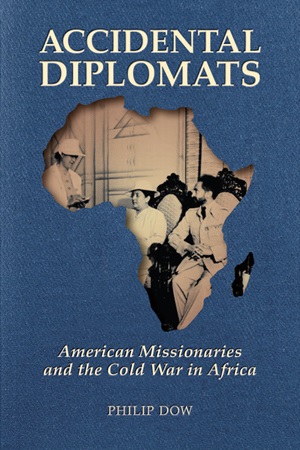 In the 20th century, a hidden chapter of the Cold War unfolded in Africa, shaped by American evangelical missionaries.
“Accidental Diplomats uncovers this lesser-known story, revealing how these missionaries’ quest to spread the gospel intersected with global geopolitics. Their spiritual mission had an unforeseen impact on the socio-political dynamics of the era.
“This book offers a deep dive into the complex interplay of evangelical missions, African politics and Cold War strategies. It explores the significant yet subtle role of faith in shaping international relations and cultural transformations in Congo, Ethiopia and Kenya.
“The narrative brings to light key events and influential figures, unraveling the intricate web of religion and global power politics.”
I wrote a little bit more about the book here.
- David Maxwell: Religious Entanglements: Central African Pentecostalism, the Creation of Cultural Knowledge and the Making of Luba Katanga (University of Wisconsin Press, 2022)
 “The Congo Evangelistic Mission (CEM) was one of the most successful classical Pentecostal missions in Africa.
David Maxwell examines the roles of CEM missionaries and their African collaborators – the Luba-speaking peoples of southeast Katanga – in producing knowledge about Africa, illustrating the mutually constitutive nature of discourses of identity in colonial Africa and how the Luba shaped missionary research.”
For example:“An original and lucid contribution to the study of missionary Christianity in colonial Africa, Religious Entanglements compellingly demonstrates the influence of missionary forms of knowledge on Africanist anthropology, history, art history, and philosophy. Through nuanced, historical and context-specific research, it also furthers our understanding of the emergence of African ethnicities and African Christianity. With eloquent and precise prose, Maxwell makes a stunning contribution. This is one of the most compelling accounts of mission Christianity and African society in colonial Africa in over two decades.” – David Gordon, Bowdoin College“Religious Entanglements makes a major contribution to both African studies and the history of missions, thanks to its multiple perspectives, its concern with both contexts and comparisons, its interdisciplinary approach (from anthropology to photography), and its careful distinctions between different group responses to the mission. A most impressive study.” – Peter Burke, Emeritus Professor of Cultural History, University of Cambridge
“A brilliant, capacious, field-defining book. Maxwell not only rewrites the history of evangelical Christianity in Central Africa; he also rethinks the nature and meaning of colonialism itself, illuminating the complex ‘entanglements’ through which Europeans and Africans co-created their worlds. – James Campbell, Stanford University
Kefas Lamak stressed three main points in his review of Religious Entanglements for Studies in World Christianity:
- Maxwell argues that missionaries deserve to be recognised as major contributors to modernity and knowledge production in many colonised societies in Africa and Asia. He argues that many scholars have found comfort in dismissing the contributions of missionaries as ethnographers and viewing them in a questionable manner as exploiters, colonial agents and religious extremists.
- Although there is renewed interest in Pentecostalism in third-world countries, this is one of the few works that engage a wider historical involvement of Pentecostalism in Africa.
- Maxwell deliberately emphasises the contributions of indigenous missionaries and local people in converting and producing knowledge about the Luba people. He describes with specific names and examples how former locally enslaved people turned into missionaries and acted as interpreters, editors of local translations and informants.
* Timothy Keegan: An Age of Hubris: Colonialism, Christianity and the Xhosa in the 19th Century (University of Virginia Press, 2023)

“An Age of Hubris is the first comprehensive overview of the impact of missionary enterprise on the Xhosa chiefdoms of South Africa in the first half of the 19th century, chronicling a world punctuated by war and millenarian eruptions, and the steady encroachment of settler land hunger and colonial hegemony.
“With it, Timothy Keegan contributes new approaches to Xhosa history and, most important, a new dimension to the much-trodden but still vital topic of the impact – cultural, social and political – of missionary activity among African peoples.
“The most significant historical works on the Xhosa have either become dated, foreground imperial-colonial history or remain heavily theoretical in nature.
In contrast, Keegan draws fruitfully on the rich Africanist comparative and anthropological literature now available, as well as extant primary sources, to foreground the Xhosa themselves in this crucial work.
“In so doing, he highlights the ways in which Africans utilized new ideas, resources and practices to make sense of, react to and resist the forces of colonial dispossession confronting them, emphasizing missionary frustration and African agency.”
During an interview on the UVA Press site, Keegan said there is still some way to go in decolonizing academic studies:
I have been surprised by how much research on the history of Africa has been dominated by scholars whose primary focus is not the peoples of Africa, but rather the academic communities of their home countries.
His favourite anecdote from the book?:
Chief Maqoma, preeminent Xhosa politician, diplomat and military hero, was one striking example of how lives could be changed by the encounter. Maqoma was intrigued by the missionaries. He studied their writing, their teaching, their explanations of how the world worked. He distanced himself from the traditional chiefly realm without ever himself becoming a Christian.
He ultimately went to war with a vengeance when dispossessed of his patrimony, and ended his long, turbulent life as a prisoner on Robben Island. In his moment of ultimate defeat, he expressed his satisfaction that it was, indeed, the Christian God who would ultimately judge his colonial persecutors.
I wrote about several other books related to missions and Africa in Part III of ‘Christianity: a missionary religion.’
Following are links to earlier instalments of ‘Christianity: A Missionary Religion.’
The ‘Christianity: a missionary religion’ series:
• Introduction
1. History of Missions
2. State of World Christianity
3. Africa
4. Asia
5. Latin America
6. Not So Good News
7. New Approaches to Missions
8. Women
9. Asia
10. Imperialism / Colonialism
11. Seasoned Practitioners Offer Guidance