
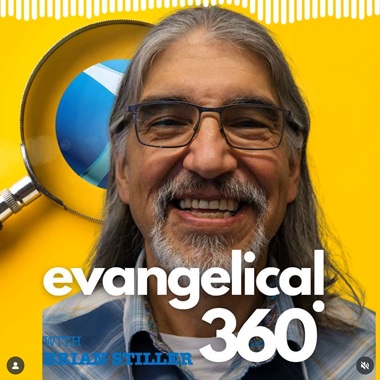
 Brian Stiller and Ray Aldred have known each other for some time, and both long ago committed to be agents of reconciliation.
In the most recent episode of his evangelical 360° podcast, Stiller sat down with Aldred to flesh out some of the issues related to that commitment.
Their conversation “explores the intersection of Indigenous identity and Christian faith, examining how these two realities inform and challenge each other in both historical and contemporary contexts.”
Stiller, who for many years was President of the Evangelical Fellowship of Canada and led Tyndale University in Toronto – and is now Global Ambassador with World Evangelical Alliance – wrote about their meeting, as an accompaniment to the YouTube podcast.
What happens when Indigenous identity meets Christianity? For Rev. Dr. Ray Aldred, Director of Indigenous Studies at Vancouver School of Theology, this intersection has been both painful and profoundly illuminating.
Ray’s story begins with generational trauma – a grandmother lost to alcoholism, a murdered uncle, experiences of racism that as a child he simply thought were “how it is with everybody.” His journey through addiction to Christian faith, and eventually to deeper healing, reveals the gaps in how many churches address cultural shame and historical wounds.
“When you feel ashamed of who you are,” Ray explains, “you think you’re too bad to receive God’s love. You spend most of your Christian life trying to do more religious stuff so God will actually love you.” This breakthrough realization transformed not only his personal faith but his approach to theology and reconciliation.
The conversation takes a fascinating turn when Ray describes reading scripture through Indigenous eyes. Suddenly biblical humour comes alive, community connections deepen and creation itself becomes family. His interpretation of Adam as “son of God” led to the revelation that the earth could be understood as mother – not in an idolatrous sense, but as a relative deserving care and respect.
“If people could feel that about the land,” he suggests, “maybe we could make different decisions when it comes to how we live upon it.”
As Canada continues its journey toward reconciliation following the devastating legacy of residential schools, Ray offers wisdom for moving forward: tell the truth completely, listen with your heart to understand pain, then develop a shared plan to heal the damage.
His approach places “the gospel in the centre” while honouring Indigenous identity and addressing historical trauma.
For anyone seeking to understand Christianity beyond colonial frameworks or wondering how faith communities might participate meaningfully in reconciliation, Ray’s insights illuminate a path that requires courage, honesty and deep listening.
In his email to subscribers, Stiller added:
In our discussion, Ray addresses the need for theological frameworks capable of responding to the unique experiences of Indigenous Christians. He critiques elements of popular evangelicalism that have struggled to fully engage issues of cultural identity, shame and generational wounds. . . .
He also discusses models of restorative justice as tools for reconciliation. These include truth-telling, empathetic listening and shared responsibility – approaches rooted in both Christian and Indigenous traditions. Importantly, he highlights the leadership of Indigenous communities in initiating and sustaining these efforts.
Ray Aldred: some thoughts
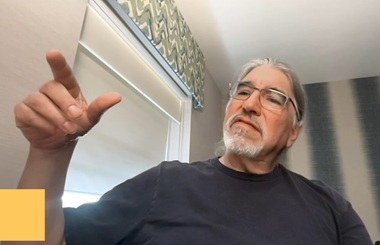
Ray Aldred spoke personally and with a reconciling spirit in his conversation with Brian Stiller on evangelical 360°. Image from YouTube
Following are some comments made by Ray Aldred during the conversation:
- “I came to faith because I was a drug addict, and I couldn’t quit drinking. I said, ‘Jesus, if you help me quit using, I’ll do whatever you want me to.'”
- “I remember listening to elders say Indigenous people are the most forgiving people in Canada. No matter what’s happened they continue to call on the rest of Canada to be reconciled – to heal the land, to heal relationships.”
- “Theology – they have some good language and taught me the stories of the Bible; Indigenous people helped me to understand them in ways that I just didn’t learn in seminary.”
- “. . . Through the lens of emotion, through the lens of community, through the lens of the land and through the lens of story – it’s not like those things aren’t there in the rest of society, but they just are further back in the memory than they were for Indigenous people. These things were right in the front so they could teach me about these things.”
- “Lots of our kids just walked away they walked away from the church. I’m not going to say they walked away from Christian faith but they just didn’t want [the church]. Maybe because they saw their dads and their moms get in such grief. How could you stay?”
- My wife and I spend a lot of time doing stuff with trauma – helping people to strengthen their coping strategies, helping people to grieve in a healthier way, helping people to see what lies they believe themselves so that then they can start to understand that Jesus loves them and he likes them. You got to go to the hard stuff. Evangelicals in the 80s, maybe they were trying to deal with the hard things and they thought, if they just focus on facts or propositional truth somehow that’ll help. But it doesn’t.”
Here are links to some of the topics addressed during the podcast:
- 0:00 – Hope Within Indigenous Communities
- 4:51 – Family Trauma and Generational Impact
- 9:38 – Discovering Deeper Healing
- 15:10 – Reading Scripture Through Indigenous Eyes
- 24:21 – Christianity and Indigenous Identity Today
- 30:41 – Placing the Gospel at the Centre
- 34:27 – Path Forward to Reconciliation
 You can learn more with Ray Aldred through his books and the Vancouver School of Theology site.
I have written about him a number of times over the years, and posted his Indigenous people still seek reconciliation.
To learn more about Brian Stiller’s evangelical 360° podcast, or to subscribe, go here.
I have posted stories by and about him in the past, including Brian Stiller and the Canadian presence in the World Evangelical Alliance.
Thank you for this.
I will listen to the podcast to equip myself further in being a holy, and healing presence of the Gospel to the globe.