
Christianity is a worldwide religion, and diaspora has been central to the reality from the earliest days
Here I look at six books, some of which deal primarily with diaspora, and others which touch on the issue while considering how the faith has spread around the world.
This is the 17th part in the ‘Christianity: a missionary religion’ series.
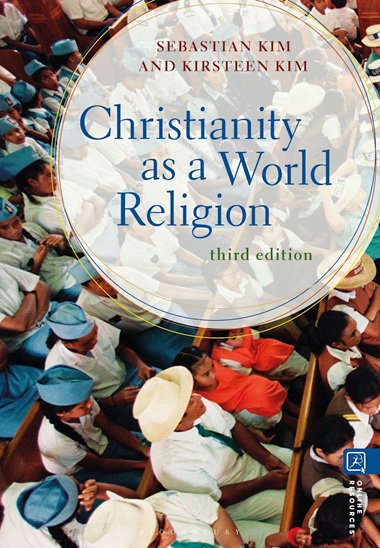
- Sebastian Kim & Kirsteen Kim: Christianity as a World Religion, third edition (Bloomsbury Academic, 2025)
Diaspora is a term which describes the dispersion or spread of people from their homeland, and Sebastian and Kirsteen Kim do a marvelous job of putting the concept into the context of a truly worldwide church.
The Introduction of Christianity as a World Religion begins with this:
Christianity justifies its description as a world religion in the title of this book because – both historically and in the present – it is spread worldwide and globally connected while locally rooted in many different societies and cultures.
In this chapter, we argue that there are eight main ways in which Christianity may be described as a ‘world religion’:
-
- Ideologically, Christianity is seen as one of several ‘world religions’;
- Topographically, Christianity is spread across the globe and is not just the religion of any one region;
- Theologically, Christianity claims to be universally applicable and locally inclusive;
- Geographically, Christianity has always been widespread and practiced locally in different communities across the world;
- Historically, Christianity does not have one single strand of development but is diffuse and polycentric;
- Anthropologically, the Christian faith is locally divergent and embedded in different cultural contexts;
- Socio-politically, the worldwide presence of Christianity today is not primarily the result of attempts by powerful churches to replicate themselves worldwide, but the result of indigenous response and grassroots movements;
- Structurally, Christianity is transnational, and Christians around the world are connected to one another through many diasporas, organizations and networks.
They also offer some valuable perspectives as I carry on with this ‘Christianity: a missionary religion’ series:
From the mid-20th century, mission and church leaders have been engaging internationally in rethinking the meaning of mission, and Christian relations with those outside the community in general, by looking again at the Bible, church traditions and the history of missions.
The balance of the conclusions, as presented by South African mission theologian David Bosch, is that Christianity is essentially missionary, but that mission in the way of Christ is not in power but in weakness (2 Corinthians 13:4). It is primarily multifaceted ‘witness’ to the nature of God, as revealed in Jesus Christ, which is an integral part of Christian living and inherent in the nature of the church.
Their insights on missions and colonialism are important to be aware of, given how much many in our culture – and even some in the church – have challenged the validity of the missionary enterprise:
The missionary nature of Christianity was much discussed in the wake of the colonial period as the extent of the complicity of Christian missionaries with colonial repression was revealed.
However, less remarked on was the way missions, with popular support at home, challenged and even subverted imperial agendas, defended humanitarian causes and (perhaps unintentionally) stimulated opposition to colonial rule.
Some Western missionaries were so transformed by their experiences overseas that they, or their children, became critical of racism and colonialism and took up a different mission of humanism, cultural pluralism and social equity when they returned to their home society.
The authors here refer to David Hollinger’s Protestants Abroad, which I wrote about here.
They consider various types of missionary activity, from agricultural and business to educational and medical and, in general, devote considerable space to missions and missionaries.
The publisher writes
Structured by geographical region, Christianity as a World Religion covers Asia, Africa, Europe, Latin America and the Caribbean, North America and Oceania, showing how Christianity is locally rooted in different communities. Within each region, it considers the history of the spread and reception of Christianity there; distinctive forms of church, worship and theology; the interreligious relations of the churches; and Christian interaction with society, politics and economics.
New to this third edition:
-
- Further coverage of the role of migration and transnational movements
- Additional attention to Orthodox Churches, Pentecostalism
- More explicit coverage of race and race theory, gender and sexuality, theory and method of world Christianity
- Relevant updates throughout, including #blacklivesmatter, climate-change, Hispanic migration to the US, the Covid-19 pandemic, the significance of Ukraine.
- Chapter summaries and updated recommended readings
Also included are study questions, maps and 40 images.
Sebastian Kim is Robert Wiley Professor of Renewal in Public Life and Academic Dean for the Korean Studies Center, Fuller Theological Seminary. Kirsteen Kim is Paul E. Pierson Professor of World Christianity and Associate Dean for the Center for Missiological Research, Fuller Theological Seminary. They are married.
- Jehu J. Hanciles: Migration and the Making of Global Christianity (Wm. B. Eerdmans Publishing, 2021)
At 461 pages, Migration and the Making of Global Christianity is probably best suited to academics and World Christianity experts. But the book is by no means beyond anyone keen on Christian history.
The book covers an awful lot of ground, but a couple of key, and related, themes ought to be widely shared, both to enlighten Christians and to challenge misperceptions in the broader community:
- Every Christian is a potential missionary. Jehu Hanciles writes:
No other single factor or feature of human existence correlates more closely with the transnational or global spread of religion than human migration.
The link between migration and global Christian expansion is as pivotal and profound as its neglect in the historical study of Christianity is perplexing.
2. The ’empire’ argument is exaggerated:
The central focus on migration adopted in this study contrasts with the proclivity in Western scholarship for explaining major historical change, including the transregional spread of religion, in terms of state action or formal structures of political power and economic self-interest – which I term the ’empire’ argument.
Empire and migration are major features of human history and are perennially linked. But the analytical yield is radically dissimilar when one or the other shapes historical perspective. This is primarily because one is top-down, the other bottom-up.
To restate my central thesis, human migration has played an indispensable role in the cross-cultural spread of the Christian faith principally because migrants who are Christian inevitably fulfil a missionary function in their encounters with non-Christian peoples and societies.
The publisher writes:
A magisterial sweep through 1,500 years of Christian history with a groundbreaking focus on the missionary role of migrants in its spread.
Human migration has long been identified as a driving force of historical change. Building on this understanding, Jehu Hanciles surveys the history of Christianity’s global expansion from its origins through 1500 CE to show how migration – more than official missionary activity or imperial designs – played a vital role in making Christianity the world’s largest religion.
Church history has tended to place a premium on political power and institutional forms, thus portraying Christianity as a religion disseminated through official representatives of church and state.
But, as Hanciles illustrates, this “top-down perspective overlooks the multifarious array of social movements, cultural processes, ordinary experiences and non-elite activities and decisions that contribute immensely to religious encounter and exchange.”
Hanciles’s socio-historical approach to understanding the growth of Christianity as a world religion disrupts the narrative of Western preeminence, while honouring and making sense of the diversity of religious expression that has characterized the world Christian movement for two millennia.
In turning the focus of the story away from powerful empires and heroic missionaries, Migration and the Making of Global Christianity instead tells the more truthful story of how every Christian migrant is a vessel for the spread of the Christian faith in our deeply interconnected world.
Scholar/author Philip Jenkins wrote the Foreword, but also a brief review for Christian Century:
Those who write the story of Christianity commonly focus on deliberate and conscious mission. But that is misleading. Repeatedly, the church has spread through actions that seem unrelated to any religious intent.
People move and migrate, sometimes reluctantly, and they take their religion with them, often with no particular intention of sharing it beyond their own community. Still, such people are creating a bridgehead for their faith. Believers arrive first, and the missionaries follow. Never underestimate the power of happenstance – or dare we call it Providence?
In an admirably ambitious study, Jehu J. Hanciles illuminates the relationship between Migration and the Making of Global Christianity. To some extent, his work should be categorized as historical, as it spans the first 1,500 years of the faith.
But he never loses his central focus on the core theme of migration, which he rightly presents as essential to understanding global Christianity in any era. Hanciles frequently refers to his other writings on modern-day African diasporas, and he never lets us forget the links and parallels that bind the early centuries to our own day.
Hanciles redraws the historical maps by which we understand the Christian story. He rightly places the emphasis on borderlands and frontier states – those territories that stand uncomfortably poised between the great empires and states, and which so often prove vital for the preservation and transmission of faith. This is an adventurous transnational study that demands to be read and cited.
Jehu Hanciles is D.W. and Ruth Brooks Professor of World Christianity and the director of Candler School of Theology’s World Christianity program. Originally from Sierra Leone, he is also the author of Beyond Christendom: Globalization, African Migration and the Transformation of the West and Euthanasia of a Mission: African Church Autonomy in a Colonial Context.
- Sam George, Bulus Galadima & Jeanne Wu, editors: Asians in Diaspora and Diasporas in Asia (Langham Global Library, 2025)
Canada, especially the West coast, knows all about the Asian diaspora, so this book is valuable to put things in perspective.
The publisher of Asians in Diaspora states:
Asians are everywhere. They move for education and economic betterment, while others are forcibly displaced.
Home to nearly two-thirds of the world’s population, it is inevitable that this region sends out and receives a large share of global migrants. There are few corners of the world devoid of the presence and influence of this far-reaching diaspora.
This collection of essays from leading scholars and seasoned practitioners explores the journeys of modern Asian diasporas from a Christian perspective.
Addressing relevant issues contextually, the authors cover pertinent topics such as justice amongst migrant workers, immigration policies and climate migration, while simultaneously reflecting on the biblical perspective of diaspora.
In the first chapter, Kirsteen Kim connects her deep knowledge of World Christianity (see her book above) with diaspora and makes five key points, beginning from the perspective that “We do not have to view migration as either wholly a good thing or an unmitigated disaster”:
- First, we can normalize migration as a common human experience. We are all in some sense aliens, exiles or pilgrims on a journey.
- Second, we can appreciate, from historical examples, how God uses coming, staying and going to grow the church.
- Third, we can embrace the challenges posed by migrant churches to the settled churches and to missions.
- Fourth, we can promote coming, staying and going as characteristic of God as the Trinity and Christ with us.
- Finally, we can diversity our responses to migration beyond evangelism and church growth on the one hand and hospitality on the other.
Asians in Diaspora is a collection of 22 essays resulting from the Lausanne Movement’s Jeju (South Korea) Diaspora Consultation held in the summer of 2023. They cover a very wide range of topics, with one, by Francis Tam, focused on ‘Global Chinese Diaspora and Recent Hong Kong Out-Migration to Canada.’
Several leading Asian scholars have endorsed the book, including:
- Rev. Dr. Patrick Fung, PhD, Global Ambassador, OMF International, Singapore
- Amos Yong, PhD, Professor of Theology and Mission, Fuller Theological Seminary, California, USA
- James Hudson Taylor IV, DMin, President, China Evangelical Seminary, Taiwan
- Karen An-hwei Lee, PhD, Provost, Wheaton College, Illinois, USA
- David Doong, PhD, General Secretary, CCCOWE (Chinese Coordination Center of World Evangelization)
- Alexander Chow, PhD, Senior Lecturer in Theology and World Christianity, Co-Director, Centre for the Study of World Christianity, School of Divinity
The three editors are:
- Sam George, PhD is Director of Global Diaspora Institute at Wheaton College Billy Graham Center and a catalyst for diasporas of the Lausanne Movement. Among his books is the three-volume series, Asian Diaspora Christianity.
- Bulus Galadima, PhD, was formerly dean of Cook School of Biola University and provost/president of Jos ECWA Theological Seminary, Nigeria. Also a catalyst for diasporas of the Lausanne Movement, he is a co-founder of Almanah Rescue Mission, a ministry empowering widows and orphans.
- Jeanne Wu, PhD, serves on the board of Gospel Operation International and has been involved in ministries and research related to the Chinese diaspora since 2003. She wrote Mission Through Diaspora: The Case of the Chinese Church in the USA.
- Bulus Galadima & Sam George, editors: Africans in Diaspora and Diasporas in Africa (Langham Global Library, 2024)
While visiting Germany this spring we attended a church in Jülich, Germany with our daughter, son-in-law and their daughters. It was pastored by three Nigerian research scientists.
Locally the Redeemed Church of God in Christ, also based in Nigeria, has planted more than 20 churches around BC.
The publishers of Africans in Diaspora point out:
Africans are on the move. They are moving within their nations, across the continent and around the world.
This is not a new phenomenon. From the days of historic slavery to modern times, Africans in pursuit of education, jobs, business and safety, have created a vibrant global diaspora. Whether voluntarily or forcibly displaced, they carry their values of spirituality, community, and hospitality wherever they go.
As the largest Christian continent in the world, African Christianity is inevitable in diasporic discourses.
This collection of essays from leading scholars and seasoned practitioners reveals the journeys of modern African diasporas from a Christian perspective.
Timely and unprecedented, it reveals how God moves with African people, making himself known amongst them and through them.
Sixteen chapters cover a wide range of topics, from ‘African Christian Diaspora in the UK’ to ‘Chinese Diaspora Missions in Africa’ and ‘Human Trafficking in Africa and Beyond.’ Among the authors are Jehu Hanciles (see his book above) and Yaw Perbi, who led International Student Ministries Canada from 2013 to 2021).
Although the African presence is not as significant as the Asian presence in this area, The Antioch Coalition, “a dynamic community of missionaries serving in North America,” held a ‘Many Cultures, One Kingdom’ conference at Calvary Worship Centre at the end of September. The gathering demonstrated the church planting diligence of African-background Christians.
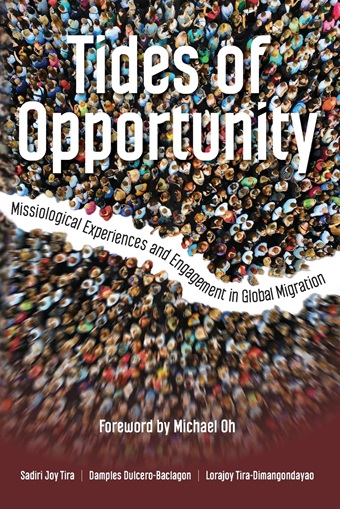
- Sadiri Joy Tira, editor: Tides of Opportunity: Missiological Experiences and Engagement in Global Migration (William Carey Publishing, 2024)
Version 1.0.0
Sadiri Joy Tira, who passed away earlier this fall, was a pioneer in the diaspora movement; I remember him being at the 2004 Lausanne Forum for World Evangelization in Pattaya, Thailand, where he played a key role in launching diaspora missiology.
In his Foreword to Tides of Opportunity, Lausanne Movement Global Executive Director / CEO Michael Oh writes:
Joy not only served as the founding catalyst for Lausanne’s diaspora global issue network, he helped the global movement to see the wave that was approaching.
In the early days, the wave seemed so small, it was almost imperceptible. But Joy kept pointing and teaching us and challenging us. Now it’s upon us, and we are better prepared for today and the future because of the diligence of Joy and his co-labourers.
An article on the Lausanne Movement site earlier this year stated:
Diaspora describes the global movement of people, whether by choice or necessity, shaped by conflicts, crises, persecution or environmental disasters.
This movement extends beyond first-generation immigrants to their descendants, whose identities are influenced by inherited memories and experiences.
Within evangelical Christianity, the Lausanne Movement analyzes diaspora through a biblical-missiological lens, highlighting human mobility as a key element of God’s mission.
Since the first Lausanne Congress in 1974, the concept of taking ‘the whole church must take the whole gospel to the whole world’ has included reflection on people on the move. However, only in 2004, at the Lausanne Movement forum in Pattaya, Thailand1 that this theme became a specific network.
The consultation’s reflections were compiled in ‘The New People Next Door – LOP 55.’2 At the Third Lausanne Congress in Cape Town, the diaspora became a central focus, leading to collaborative actions, including the official launch of the Global Diaspora Network (GDN).
Diaspora, or ‘People on the Move’ remained a key them at the fourth Lausanne Congress, at Incheon/Seoul, South Korea in the fall of 2024.
The publisher notes:
Never have so many people left their homes and migrated to other parts of the world as we’ve seen in recent years. This phenomenon creates as many opportunities as challenges.
We are witnessing a massive increase in urbanization, pluralization, multiculturalism and interfaith dialogue. What are the implications for the church as it tries to reach the nations?
Tides of Opportunity brings together experts from diverse backgrounds to consider the practical significance of this mass migration. The reasons for these population movements are as varied as the people.
Sadiri Joy Tira explores several causes, like military conflict, economic hardship and natural disasters.
The contributors not only explain such trends but suggest possible ways to engage with diaspora neighbors. Through case studies, this volume also examines lesser-known dynamics, such as sex trafficking and the movement of immigrants to rural areas.
This book challenges us to find more creative and integrated mission strategies for effectively reaching out to the various “peoples on the move” with the gospel. How will you respond to the tides of opportunity?
Tira moved from the Philippines to Canada in 1981. An article on the Outreach Canada (based in Delta; he had close connections) gives a good sense of his irenic approach. In ‘From airport to cemetery: How to live successfully in our adopted homeland,” he wrote:
Immigrants arriving at airports or seaports are all bound for cemeteries.
In between these two places, there are hospitals, drug stores, malls, restaurants, schools, and public spaces like places of worship (temples, synagogues, church buildings), parks, and libraries – all of which have rules and policies. . . .
As Christian immigrants in Canada, from the airport to the cemetery, we are recipients of hospitality, kindness, and generosity. But we also have responsibilities: to work hard, make peace, foster healthy social relationships, and pray for the economic success and stability of our adopted country.
Tira had Craig Kraft, who until 2023 was Executive Director of Outreach Canada, write one chapter in Tides of Opportunity.
Kraft’s ‘Embracing the refugees in Canada through hospitality’ concluded by describing five “fruitful practices for Canadians:
-
- Rediscover biblical hospitality
- Welcome strangers
- Be known for our love
- Know our neighbourhood
- Repent and pray
Dr. Sadiri ‘Joy’ Tira A was diaspora missiology specialist at the Jaffray Centre for Global Initiatives at Ambrose University, which is based in Calgary. Apart from his long-term role with the Lausanne Movement, he was for over two decades pastor of First Filipino Alliance Church in Edmonton.
Associate editors of Tides of Opportunity are Damples Dulcero-Baclagon, managing editor of Asian Missions Advance and secretary of Asia Missions Association, and Lorajoy Tira-Dimangondayao, an MTS student at St. Stephen’s College at the University of Alberta.
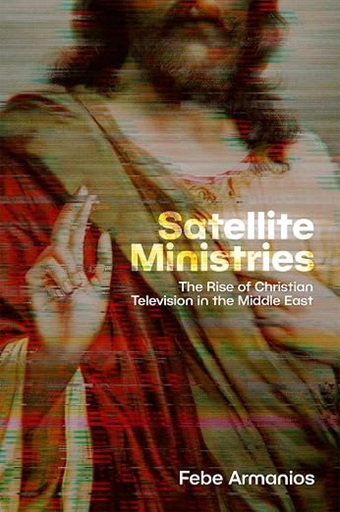
- Febe Armanios: Satellite Ministries: The Rise of Christian Television in the Middle East (Oxford University Press, 2025)
A recent article on Christian Today covered “Mozhda TV, which its founders describe as the first Afghan Christian television channel.” That is impressive, but certainly not the first of its kind. It comes in the wake of a book which looks at ‘the rise of Christian television in the Middle East.’
The publisher writes of Satellite Ministries:
In 1981, a satellite television station called Star of Hope began broadcasting from Israeli-occupied South Lebanon.
Backed by American missionaries, Israeli politicians and Lebanese Catholic leaders, the channel aired Western entertainment and Christian content using a repurposed ABC Monday Night Football truck situated on the Israel-Lebanon border.
Later renamed Middle East Television (METV), its programming included American soap operas, sports and evangelical content alongside innovative Arabic Christian televangelism. It was a station of enormous consequence.
METV spurred the growth of competing Christian broadcasters and reshaped the Middle East’s media and religious landscape over the next four decades. Yet it was, of course, controversial – its foreign, imperialist, and proselytizing approach to media was a source of curiosity and consternation in the region and, occasionally, around the world.
Through extensive fieldwork and archival research, Febe Armanios explores how Western evangelicals and indigenous Christians harnessed terrestrial and satellite technologies to promote Christian television in the Middle East.
The 16 channels analyzed in this study fall into three main categories: Western-backed conservative outlets with a charismatic and apocalyptic outlook; middle-ground channels that sought to balance their international sponsors’ expectations with local interests; and grassroots initiatives rooted in ancient church traditions.
The histories and programming strategies of primarily Arabic, but also Turkish and Persian, Christian channels reveal how media producers forged unexpected political alliances, pursued sectarian objectives and navigated various transnational influences.
Satellite Ministries explores how modern expressions of faith, technology and political power intersected and clashed across the Global South and beyond. In this groundbreaking work, Armanios presents a crucial examination of this unique and little-known media landscape.
Febe Armanios is the Philip Battell and Sarah Frances Cowles Stewart Professor of History at Middlebury College. She specializes in the history of Christian communities in the Middle East, with a focus on Egypt’s Copts, as well as the history of comparative religious practices. She is also author of Coptic Christianity in Ottoman Egypt (OUP, 2011).
The ‘Christianity: a missionary religion’ series:
• Introduction
1. History of Missions
2. State of World Christianity
3. Africa
4. Asia
5. Latin America
6. Not So Good News
7. New Approaches to Missions
8. Women
9. Asia
10. Imperialism / Colonialism
11. Seasoned Practitioners Offer Guidance
12. Africa
13. Middle East
14. China
15. Asia
16. Women